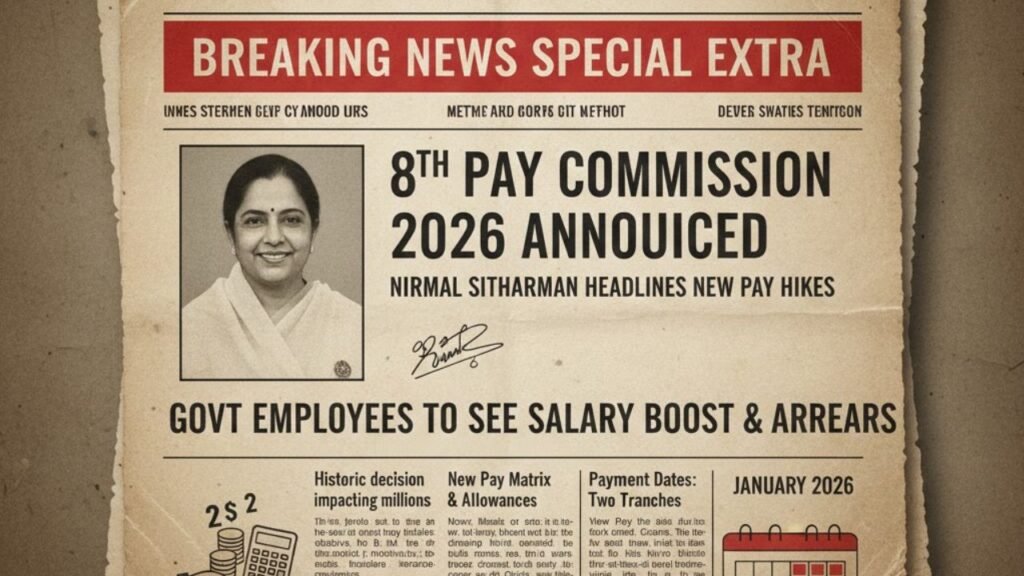
8th Pay Commission 2026: The Government of India has announced the formation of the 8th Pay Commission. The decision was shared on January 16, 2025, and is expected to bring big changes for government workers. Over 50 lakh central government employees and around 65 lakh pensioners may benefit from it. The new system is planned to start in early 2026. The main goal is to update salaries and pensions according to today’s cost of living. This move is being seen as an important step for financial security.
Why the 8th Pay Commission Matters
A Pay Commission is formed to review and suggest changes in salaries and pensions of government employees. As prices of goods and services increase, employees need better pay to manage daily expenses. The 8th Pay Commission aims to improve basic pay, allowances, and pension benefits. It also focuses on fairness and transparency in salary structure. By doing this, the government hopes to reduce financial stress among workers. A better salary system can also improve job satisfaction and performance.
Expected Salary Hike and Allowance Changes
Under the new commission, employees may see an increase in their basic pay. Allowances like Dearness Allowance (DA), House Rent Allowance (HRA), and travel allowance are also expected to be revised. When the new pay structure starts in 2026, DA will reset to zero and begin increasing again based on inflation. This system helps protect employees from rising prices. The final numbers will be shared after the commission submits its report. Still, many workers are hopeful about a noticeable rise in take-home salary.

Pension Reforms for Retired Employees
The 8th Pay Commission is not only for working employees but also for pensioners. Retired employees may receive higher monthly pensions under the new structure. Reports suggest that minimum pensions could rise significantly. The new fitment factor will decide how much the pension increases. The aim is to reduce the gap between old and new pensioners. These changes will help retired people manage medical costs and daily expenses more easily.
How It May Affect the Economy
When millions of people receive higher salaries and pensions, they are likely to spend more money. This can boost sectors like retail, housing, healthcare, and transport. Increased spending helps businesses grow and creates more economic activity. A financially secure workforce can also work more efficiently. The government believes fair pay will improve productivity and attract skilled people to public service. So, the benefits may go beyond just employees and pensioners.
Timeline and What Happens Next
The commission was formed in January 2025 and is currently consulting different departments and unions. The final report is expected by the end of 2025. After approval, the new salary and pension system may start in early 2026. Official updates will be shared by the Department of Personnel and Training and the Ministry of Finance. Employees are advised to follow official announcements carefully. Proper planning will help families manage their finances better once the changes take effect.

8th Pay Commission 2026 – Key Information Table
| Category | Details |
|---|---|
| Commission Name | 8th Pay Commission |
| Announcement Date | January 16, 2025 |
| Expected Implementation | Early 2026 |
| Beneficiaries | 50 lakh employees |
| Pensioners Benefited | 65 lakh pensioners |
| Main Focus | Salary and pension revision |
| Allowances Revised | DA, HRA, Travel, Medical |
| DA Status | Will reset to zero in 2026 |
| Pension Update | Higher minimum pension expected |
| Reporting Authority | DoPT & Finance Ministry |
Important Points to Remember
- The final salary increase depends on the fitment factor.
- DA will restart from zero once the new pay scale begins.
- Pensioners are also included in the reform.
- Official details will come after the final report.
- Employees should wait for government notifications before making financial plans.
FAQs
Q1. What is the 8th Pay Commission?
It is a government panel formed to review and revise salaries and pensions of central government employees.
Q2. When will it be implemented?
It is expected to start in early 2026.
Q3. Who will benefit from it?
Around 50 lakh employees and 65 lakh pensioners may benefit.

Q4. Will pensions increase too?
Yes, pension reforms are part of the new commission.
Q5. What happens to Dearness Allowance (DA)?
DA will reset to zero in 2026 and increase again based on inflation.
Q6. Who will release official updates?
The Department of Personnel and Training (DoPT) and the Finance Ministry will share official notifications.

Q7. Is the salary hike confirmed?
The commission is formed, but final salary figures will be confirmed after the report is approved.
Disclaimer: This article is for general information only. For accurate and latest updates, always check official government notifications.