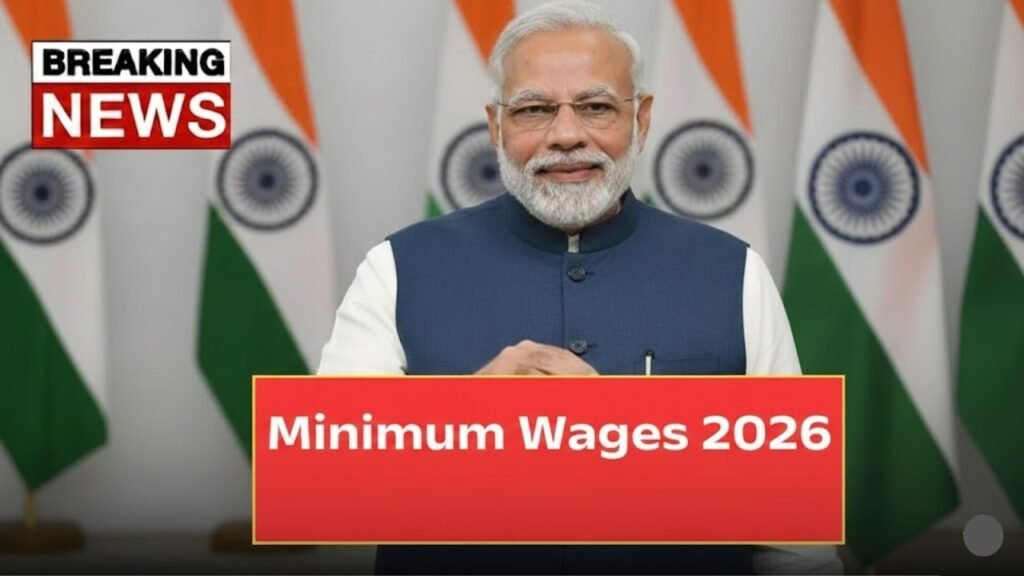
Minimum Wages 2026: In the bustling markets, on construction sites, and within the small workshops that form the backbone of India’s economy, a sense of cautious optimism is stirring. The government’s recent approval to significantly increase the minimum wage—potentially up to 2.5 times the current rates—has become a topic of conversation in chai stalls and factory floors alike. This isn’t just another incremental policy update; for millions of workers and their families, it feels like a long-overdue acknowledgment of their contribution to the nation’s growth. To understand the weight of this decision, one must look beyond the numbers. For a daily-wage labourer in a Tier-2 city or a contract worker in a rural manufacturing unit, every rupee counts. For years, the gap between the cost of living and the wages earned has been widening, forcing many households into a precarious cycle of debt and compromise. The Minimum Wages 2026 announcement is, at its heart, an attempt to bridge that gap and restore a sense of fairness to the labour market. It’s a story about dignity, survival, and the hope for a more stable tomorrow.
Why This Time Feels Different
For decades, revisions to the minimum wage were often reactive—small adjustments made after inflation had already eroded a worker’s purchasing power. This time, the approach appears more proactive and ambitious. The government’s decision to sanction a near 2.5x hike signals a fundamental shift in perspective: fair wages are now being seen not as a cost to the economy, but as a vital investment in its foundation. The logic is simple yet powerful. When workers earn a living wage, they spend more on food, clothing, and education for their children. This increased spending circulates through local economies, boosting demand for goods and services. It can create a virtuous cycle where better-paid workers are healthier, more productive, and less likely to be absent from work. This move is therefore not just a social welfare measure; it’s an economic strategy aimed at building a more resilient and robust consumer base from the ground up.
What This Means for a Worker’s Daily Life
Imagine being able to plan a monthly budget without constant anxiety. For the family of a construction worker or a security guard, this wage hike could transform that imagination into reality. The additional income is likely to first go towards essentials that are often compromised: more nutritious food, timely medical care, and the ability to pay school fees without borrowing money at high interest rates. In rural India, where seasonal work and irregular income are common, a higher statutory wage floor provides a critical safety net. It reduces the desperation that forces workers to accept exploitative terms. In cities, while living costs are steeper, the hike empowers workers with better bargaining power. It sends a clear message that a full day’s work deserves a fair day’s pay, allowing millions to participate more fully in the urban economy they help build every day.

The Other Side of the Coin A Business Perspective
While the news is welcomed by workers, it presents a complex challenge for businesses, particularly the millions of micro, small, and medium enterprises (MSMEs) that form the core of Indian industry. For a small manufacturer or a local retailer operating on thin margins, a sudden doubling of labour costs can be daunting. They face a difficult choice: absorb the cost, increase prices, or reduce their workforce. This is where thoughtful implementation becomes crucial. Industry bodies are advocating for a phased rollout, easier access to credit, and clear, simple compliance rules to help smaller businesses adapt. History has shown that businesses that invest in their workforce often see returns in the form of lower turnover and higher productivity. The hope is that with the right support, the private sector can view this change not as a burden, but as an opportunity to innovate, improve efficiency, and build a more stable and motivated team.
Understanding Key Aspects at a Glance
The table below summarizes the core elements of this landmark decision, offering a clear overview of its structure and intent.
| Aspect | Detailed Insight |
|---|---|
| Policy Name | Minimum Wages Revision 2026 |
| Core Objective | To significantly enhance the statutory minimum wage, aiming for a near 2.5x increase to restore purchasing power and ensure income security for low-paid workers. |
| Primary Beneficiaries | An estimated millions of workers across sectors, including construction, manufacturing, agriculture, services, and the vast informal/unorganized sector. |
| Underlying Rationale | To correct the erosion of real wages due to inflation, boost domestic consumption, reduce income inequality, and enhance the dignity of labour. |
| Expected Impact on Workers | Improved ability to afford food, healthcare, housing, and children’s education; reduced reliance on high-interest debt; increased financial stability and morale. |
| Expected Impact on Economy | Potential for increased consumer demand, higher worker productivity, reduced labour disputes, and a push for greater efficiency in businesses. |
| Challenges & Concerns | Adaptation pressure on Micro, Small & Medium Enterprises (MSMEs) due to increased payroll costs; risk of job losses in some sectors if not managed carefully; need for strict enforcement. |
| Key to Success | Phased implementation, clear compliance guidelines, support for small businesses (e.g., easier credit), and robust mechanisms to ensure the new wages are actually paid. |
FAQs
1. What exactly is the Minimum Wages 2026 announcement?
It is a government-approved proposal to significantly revise the statutory minimum wage paid to workers in India. Reports suggest the new minimum wage could be nearly 2.5 times the existing rates, marking one of the most substantial hikes in recent history.

2. Who will benefit from this wage hike?
The primary beneficiaries are low-paid workers, especially those in the unorganized sector. This includes daily wage labourers, contract workers in manufacturing and construction, agricultural labourers, security guards, domestic help, and workers in small shops and establishments.
3. Why is the government implementing such a large increase?
The decision is driven by several factors, primarily the need to restore the purchasing power of wages eroded by long-term inflation. It is also intended to reduce income inequality, boost overall demand in the economy, and ensure that workers can afford a basic, dignified standard of living.
4. How will this affect small businesses and MSMEs?
This is a critical question. Small businesses operating on thin margins may face increased financial pressure. The success of the policy will depend on providing them with support, such as a phased implementation schedule, simplified compliance, and access to affordable credit to help them adjust.

5. When will the new minimum wages come into effect?
The specific implementation date and detailed rates will be outlined in official notifications from the government and respective state authorities. Workers and employers are advised to follow these official channels for confirmed timelines.
6. Could this wage hike lead to job losses?
There is a potential risk in some highly labour-intensive sectors if businesses struggle to absorb the increased costs. However, economists also argue that higher wages can boost productivity and demand, potentially creating new opportunities. The net effect will depend heavily on how smoothly the transition is managed.