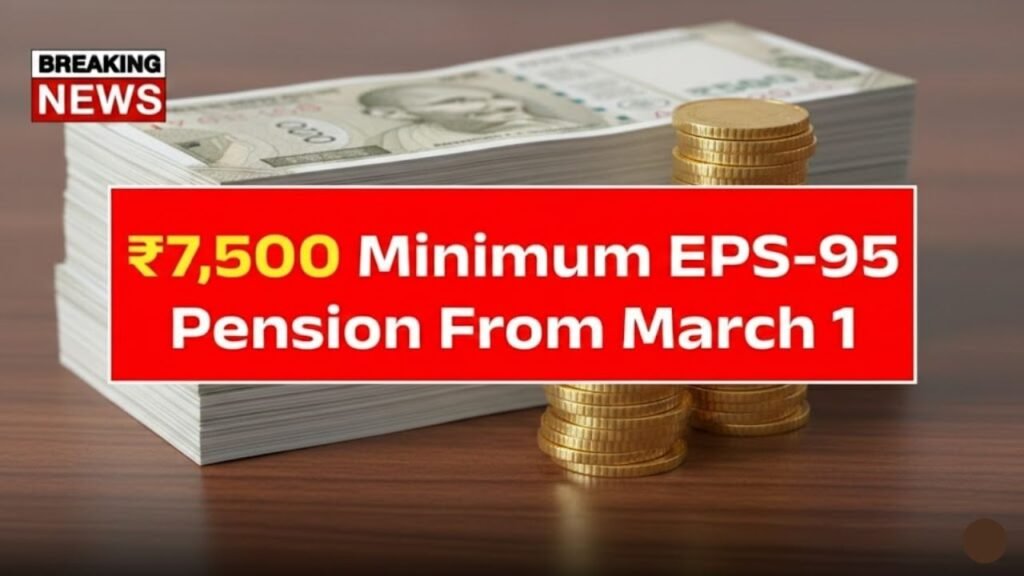
EPS-95 Pension Hike 2026: For millions of retired private-sector employees in India, the monthly pension from the Employees’ Pension Scheme (EPS-95) is more than just a government benefit—it is a lifeline. In 2026, the call to revise this pension has grown into a nationwide chorus. Pensioners and unions are no longer simply requesting a cost-of-living adjustment; they are advocating for a fundamental change that ensures dignity and security in their golden years. At the heart of this movement is a stark reality: the current minimum pension of ₹1,000 per month, fixed over a decade ago, has been eroded by relentless inflation. This article breaks down the current status of this demand, the government’s stance, and what pensioners should know as the discussions unfold.
The Current Reality of the ₹1,000 Minimum Pension
Despite significant changes in the economic landscape, the minimum pension under EPS-95 remains frozen at ₹1,000 per month . While the final pension amount an individual receives depends on their pensionable salary and total years of service—calculated using a specific formula—this ₹1,000 figure serves as the government-guaranteed floor. For a large segment of retirees, particularly those who had short service tenures or lower wages during their employment, this floor becomes their actual income. Pensioners’ associations argue that this amount, which might have provided basic support years ago, is now wholly inadequate for covering essential expenses like food, medicine, and housing in 2026 .
Why the Demand for ₹7,500 Has Gained Momentu
The demand to raise the minimum pension to ₹7,500 is not an arbitrary number. It stems from the lived experiences of retirees who find it increasingly difficult to manage their monthly budgets. Here is a closer look at the factors driving this demand:
The Rising Cost of Daily Life
Inflation has silently but significantly increased the price of everyday commodities. For a retiree living on a fixed income, the hike in vegetable prices, cooking gas, and transportation costs directly impacts their ability to make ends meet. The ₹1,000 pension, which was never intended to be a primary source of lavish income, has now fallen far behind the actual cost of living .

The Burden of Healthcare Expenses
As people age, medical expenses become a non-negotiable and often unpredictable part of their monthly outlay. From regular check-ups and blood pressure medication to more serious interventions, healthcare costs have skyrocketed. Pensioners argue that the current minimum pension is often completely consumed by a single doctor’s visit or a week’s worth of medicine, leaving nothing for food or other necessities .
The Call for Inflation Indexation
Beyond just a hike to ₹7,500, pensioners are also demanding the introduction of a Dearness Allowance (DA) mechanism similar to what government employees receive. This would mean the pension amount is periodically adjusted to offset inflation, ensuring that its purchasing power does not erode over time .
The Government’s Position A Balancing Act
The government has formally acknowledged these demands in Parliament. In responses to questions raised in both the Rajya Sabha and Lok Sabha in early 2026, the Ministry of Labour and Employment has laid out its position clearly. Officials have stated that EPS-95 is a “defined contribution-defined benefit” scheme. This means the pension fund is built from specific contributions (8.33% from employers and 1.16% from the government) and must remain financially viable to pay out benefits for decades to come . Minister of State for Labour and Employment, Shobha Karandlaje, emphasized that any increase in the minimum pension requires extremely careful financial analysis. The pension fund is actuarially valued every year to ensure it can meet its future liabilities. A significant hike to ₹7,500 would require a substantial increase in budgetary allocation, and policymakers must weigh this social welfare need against the long-term sustainability of the fund . As of now, the government has stated there is no immediate timeline for this revision .
Clarifying the Demand vs. The “Higher Pension” Option
It is important for EPS members to understand that this demand is different from the “higher pension” option that was a subject of litigation and recent EPFO windows.

- Minimum Pension Demand: This is a universal demand to raise the floor from ₹1,000 to ₹7,500 for all pensioners who currently receive very low monthly payments. It is about social security and ensuring a basic standard of living for every retiree .
- Higher Pension Option: This was a specific option for eligible members to receive a pension based on their actual salary (which may have been higher than the statutory wage ceiling), rather than the capped salary. This required joint contributions from employee and employer on the higher amount
- The Financial Impact and Who It Help
If implemented, a hike to ₹7,500 would be transformative for a significant portion of EPFO’s pensioners. According to data tabled in Parliament in February 2026, out of over 82.11 lakh active pensioners, nearly 47.04 lakh (57%) currently receive a monthly pension of less than ₹9,000 . For these 4.7 million families, an increase would mean the difference between mere survival and a life with a modicum of financial stability and dignity . It would reduce dependence on family members and allow the elderly to manage their own expenses independently
EPS-95 Pension Demand: Key Information at a Glance
The table below summarizes the crucial aspects of the 2026 pension revision demand.
| Aspect | Details |
|---|---|
| Scheme Name | Employees’ Pension Scheme, 1995 (EPS-95) |
| Current Minimum Pension | ₹1,000 per month |
| Demanded Minimum Pension | ₹7,500 per month |
| Primary Reasons for Demand | High inflation, rising medical costs, and the erosion of purchasing power over the last decade |
| Government’s Stated Position (2026) | No immediate plan to raise it to ₹7,500; any decision requires actuarial assessment to ensure long-term fund sustainability |
| Number of Pensioners Affected | Over 47 lakh pensioners currently receive less than ₹9,000 per month, making them potential beneficiaries of a minimum wage hike |
| Key Supporting Demand | Introduction of Dearness Allowance (DA) to link pension with inflation |
| Official Source for Updates | Employees’ Provident Fund Organisation (EPFO) website and official government notification |
FAQs
1. Has the government officially increased the minimum pension to ₹7,500?
No. As of the latest parliamentary sessions in early 2026, the government has clarified that there is no immediate proposal or timeline to increase the minimum pension from ₹1,000 to ₹7,500 .
2. Why are pensioners demanding ₹7,500 specifically?
Pensioners’ associations argue that ₹7,500 is the bare minimum required to cover basic food, housing, and healthcare costs in the current economic climate. The current amount of ₹1,000 is seen as highly inadequate for a dignified life .

3. What is the government’s main concern about raising the pension?
The primary concern is the financial sustainability of the EPS fund. With over 82 lakh pensioners, a significant hike would create a massive financial liability. The government must ensure the fund, built from employer and government contributions, remains solvent for current and future retirees .
4. What is the difference between this demand and the Supreme Court case on higher pension?
They are different issues. The higher pension case was about allowing members to contribute and receive pensions on their actual higher salaries. The current minimum pension demand is about raising the base amount (the floor) for everyone who gets a low pension, regardless of their past salary .
5. How many people currently get a pension below ₹9,000?
According to government data shared in Parliament, approximately 47.04 lakh pensioners receive a monthly pension of less than ₹9,000 .
Conclusion
The demand for an increase in the EPS-95 minimum pension to ₹7,500 represents the hopes and needs of millions of elderly Indians. While the government has listened to these concerns, the path forward requires navigating complex financial realities. For now, pensioners are advised to stay informed through official channels and wait for any formal announcements from the EPFO or the government.

Official Disclaimer: This article is for informational purposes only and is based on publicly available discussions, news reports, and parliamentary records as of 2026. It does not constitute an official notification of policy change. Readers are strongly advised to refer to the official website of the Employees’ Provident Fund Organisation (EPFO) and government publications for the most accurate and up-to-date information.